


Brief description: The purpose of the module is to give to the students the basic concepts of evolution, anatomy and organ functions of animals and plants.
1. Knowledge and understanding :
At the end of the module, the student should have an understanding of:
Ø The various stages of cell division
Ø Gametogenesis, fecundation and embryonic development
Ø The structure and functions of various animal and plant tissues.
Ø The differences in structure between various organs of plants and animals.
Ø The differences between various vital functions in plants and animals.
Ø The theories and the evidence of the biological evolution.
2. Practical knowledge
At the end of the module, the student should have an understanding of:
Ø How to recognize using a microscope the various cellular organelles and explain their functions.
Ø How to recognize using a microscope the characteristics of various tissues and to give their functions.
Ø How to locate on anatomical models, the various tissues and organs of the plants and animals.
Indicative content:
Ø Study of the cell: Concept of cell. Prokaryotic and eukaryotic cells, structure, chemical nature and role of the various cellular components. The cell cycle.
Ø Cellular organization and structure;
Ø Different types of cells
Ø Introduction to cell physiology
Ø Plant tissues: parenchymas, meristems, protective tissues, supporting tissues, conductive tissues and secretive tissues.
Ø The anatomical structure of the plant organs: Anatomy of the stem, the root, the leaves and the floral parts. Modes of ramification of the stem. Modes of adaptation of the roots, the leaves and the floral parts
Ø Animal tissues: epithelial tissues, connective tissues, cartilaginous tissues, blood, muscular tissues, nervous tissues.
Ø Anatomy of the organs of the animal body: skeletal anatomy, the muscles, the nervous system; sensory organs of touch, smell, taste, hearing and sight.
Ø Concept on functions: the digestive system and digestion, the circulatory system and circulation, the respiratory system and breathing, the urogenital system and reproduction.
Ø Embryology: Meiosis, gametogenesis, fecundation, types of embryonic development, mechanisms of differentiation.
Ø Outline on the Biological Evolution: Definition of evolution and phylogeny, theories of evolution, evidence of evolution, various levels of evolutionary development, speciation and natural selection.
Indicative bibliography
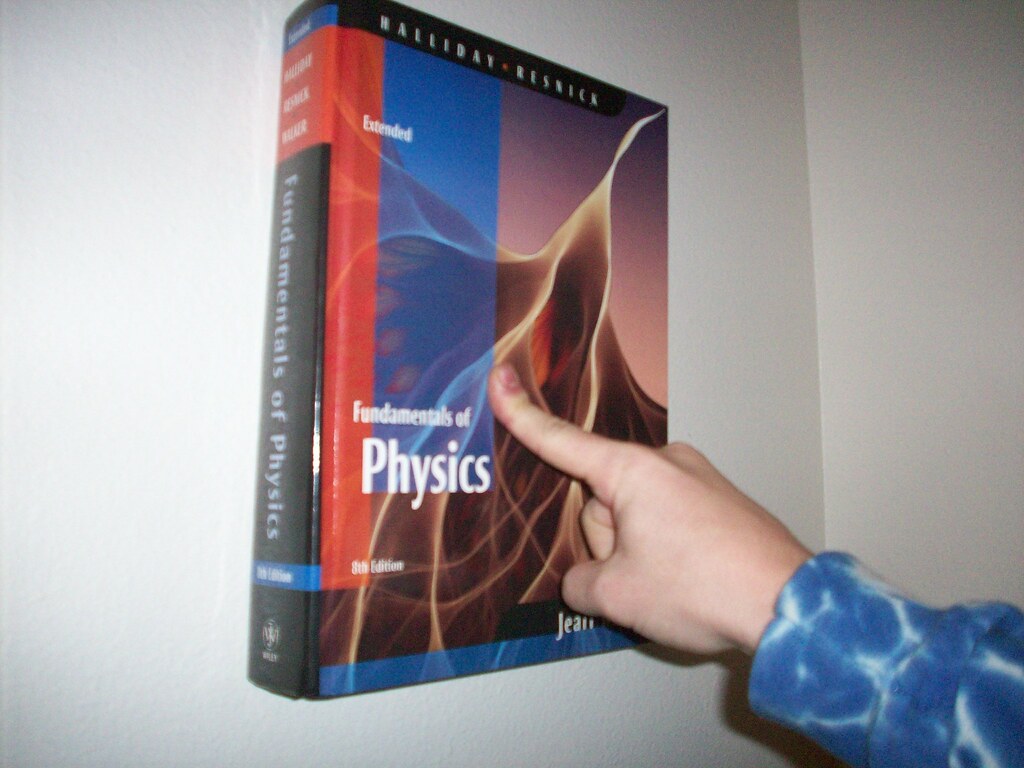
This module of fundamental physics explores almost all branches of basic Physics starting with Classical mechanics where students will learn the motion of bodies, first without considering the causes of motion , secondary the exploration of causes of motion and the related Newton's laws of motion and their applications. Later, students will learn the concepts of work and energy, rotational motion, elements of fluid mechanics and concepts of heat and calorimetry. In second part of this module, students will learn the behaviors of electric charges either statically or dynamically under electrostatics and electrokinetics, respectively. After that, students will be informed about magnetism and magnetic induction, which will explore in details the concepts of alternating current circuits. In part three of this same module, students will explore the particle nature of light under geometric optics, where students will learn both reflection and refraction of light in details.
- Teacher: Jean Bosco BUGINGO